Google previews Genie 4 interactive worlds with native audio
October 28, 2026
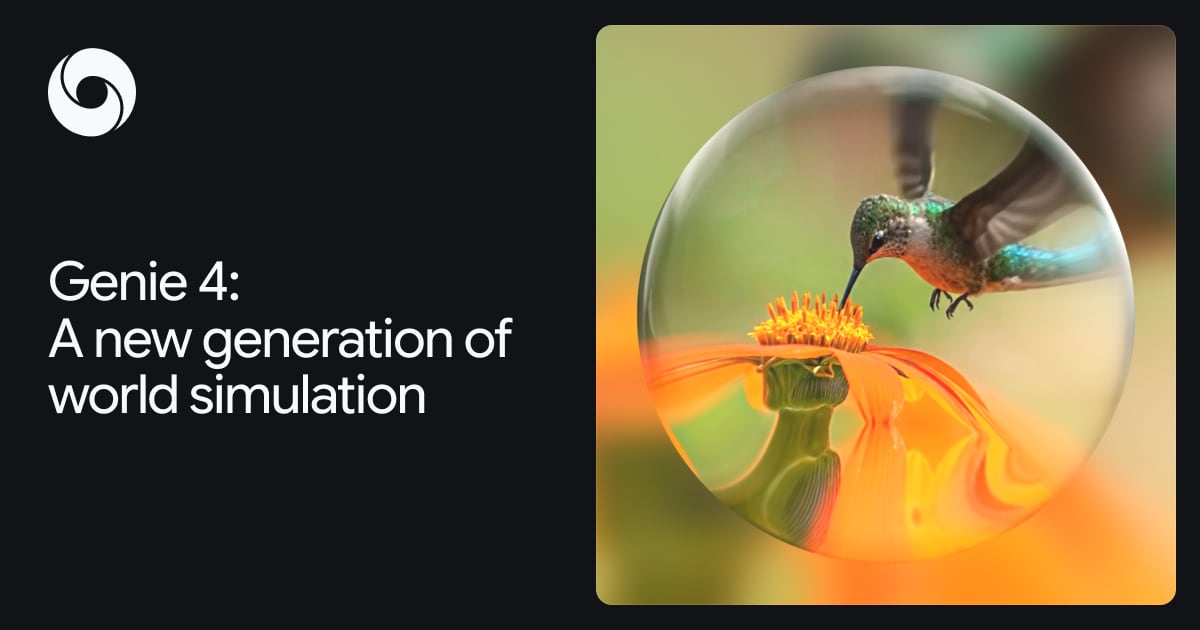
Read Original: Google DeepMindGoogle DeepMind announced Genie 4 on October 27 as a research preview for trusted testers. The world model generates interactive environments with native audio, including ambient sound and dialogue, and allows users to steer scenes through natural-language instructions.
DeepMind says access is coming to Google AI Ultra subscribers through Project Genie and to early access partners through the Gemini API and Google AI Studio. That is a planned expansion, rather than general availability today. The company also acknowledges limitations: objects and visual details can drift, while physical interactions, spatial accuracy, legible text and long-term consistency remain research challenges. Generated video and audio will include SynthID watermarks.
JetherVerse takeaway: an explorable simulation could help a team communicate an idea that is difficult to capture in a static image. The practical opportunity is early exploration: showing how an environment might feel, comparing alternative scenes or discussing a proposed interaction before committing to a full implementation.
That exploration needs a clear label. A generated scene should not be presented to a client as evidence that a physical design works or that a finished product already exists. Teams should separate the visual concept from the requirements that engineers and developers will later need to verify.
For a creative project, begin with one question the prototype should answer. Perhaps the team wants to compare the atmosphere of two spaces or assess whether an interaction is understandable. Record which elements must stay consistent, then check those elements during each session. Keep notes on changes that improve the concept as well as changes that merely make the demonstration look impressive.
A useful handover would include the agreed goal, reference materials, decisions and remaining uncertainties. This makes it easier to turn exploration into a buildable specification instead of losing the reasoning when the demonstration ends.
JetherVerse’s AI solutions service at https://jetherverse.com/services/ai-solutions is relevant to evaluating where experimental tools fit into an existing workflow. Treat the preview as an opportunity to learn, and base any production commitment on capabilities that can be tested and supported.
Source:Google DeepMind