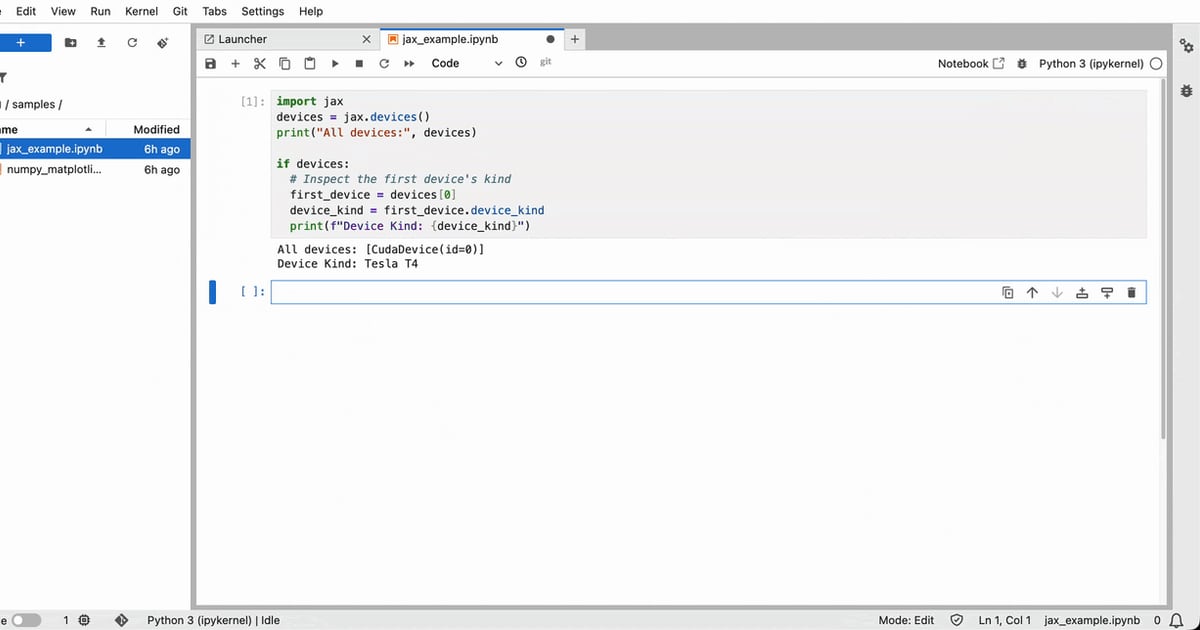
Google introduces self-hosted GKE Workspaces for AI development
November 5, 2026
Read Original: Google Open Source BlogGoogle introduced GKE Workspaces on November 4 as a self-hosted AI and machine-learning development platform for Google Kubernetes Engine. Built on Kubeflow Workspaces, it offers a web dashboard for selecting environments such as JupyterLab or in-browser VS Code and accessing approved hardware.
Google describes stateful pause and resume capabilities, persistent workspace storage and options for cloud GPUs and TPUs. Platform administrators manage the cluster, available images and hardware choices. Both GKE Workspaces and the upstream Kubeflow Workspaces project use the Apache 2.0 license. The announcement concerns software deployed on a team's cluster, rather than an automatically available personal notebook service.
JetherVerse perspective: teams evaluating a shared development platform should start with the work they want to make repeatable. A useful brief might describe who needs an environment, what information they can access, how long an experiment should run and who owns the results. Those questions give the technical team a better target than a general request for more computing power.
Separate the researcher's experience from the operating team's responsibilities when judging a pilot. The person building a model may need a simple way to resume work. The person supporting that work needs clear procedures for access, spending, troubleshooting and retirement of abandoned projects. A polished dashboard should be assessed alongside those less visible tasks.
A small evaluation could follow one non-sensitive experiment from creation through interruption, recovery and final export. Record the steps another teammate would need to reproduce the result. Also ask what happens when the original project owner leaves or when the team needs to move its work elsewhere.
The commercial decision should account for support effort as well as the bill for running an experiment. Name an owner, set a review date and define an acceptable cost before expanding access. For a growing business, a successful platform is one that keeps useful work understandable and manageable after the first demonstration, not merely one that makes the initial launch look effortless.
Image: A frame from Google's official GKE Workspaces demonstration.
Source:Google Open Source Blog