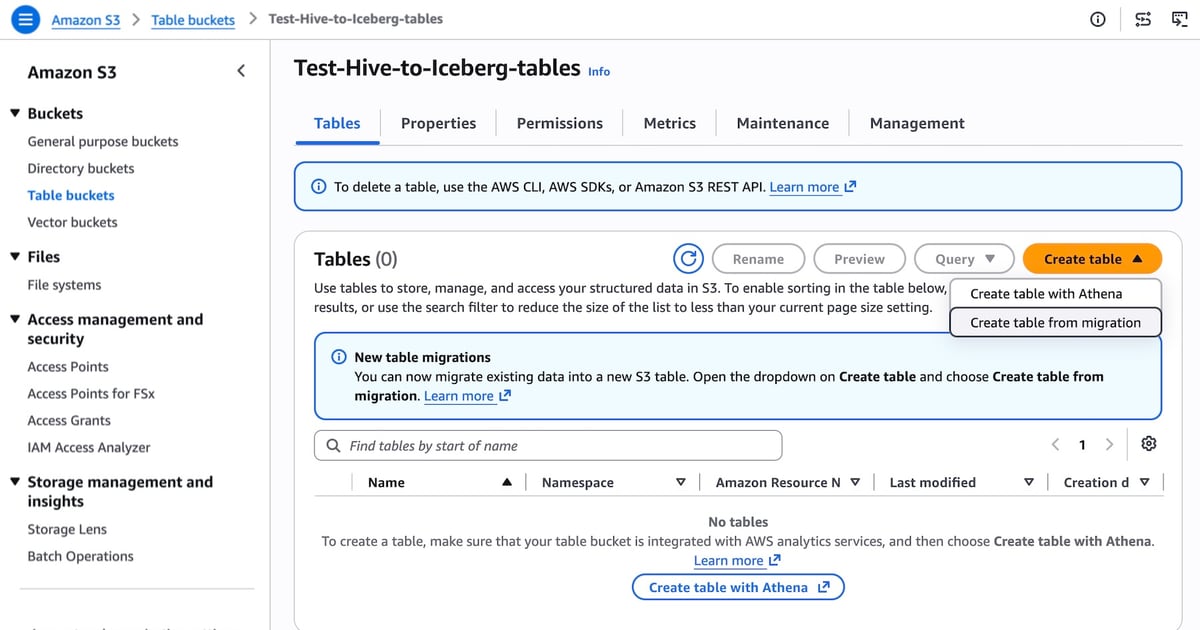
Amazon S3 Tables adds managed Hive-to-Iceberg migration
November 5, 2026
Read Original: Amazon Web ServicesAWS announced managed Hive-to-Iceberg migration in Amazon S3 Tables on November 4. At launch, it supports AWS Glue-registered Hive tables stored as Parquet in S3, within the same account and Region.
The service checks compatibility before copying data and supports incremental synchronisation before completion. Source writes can continue during migration, with a brief interruption needed at cutover. The destination remains read-only until migration is completed. Availability initially covers ten specified AWS Regions, rather than every Region.
JetherVerse perspective: A managed migration option can change how a team organises a project, but the business still needs to define what a successful move means. Copying data and preserving the reports people trust are different acceptance criteria. Treat both as requirements before committing a production dataset.
We recommend starting with one representative table and the reports that depend on it. Compare the old and new results using the same business questions, including unusual dates, missing values and recently updated records. Ask the report owner to confirm the meaning of the output, rather than relying only on a successful technical status.
Document who can read and change the destination. A migration review should include access arrangements, the people who approve the final switch and the support route if a scheduled report fails. These decisions belong in the plan before the busiest reporting period arrives.
Cost comparisons should also reflect the whole operating arrangement. Include duplicated storage during the trial, verification work and the ongoing effort needed to maintain downstream systems. A simpler migration process does not establish the savings for a particular business.
Finally, keep a clear decision point between testing and changing production. Record the checks completed, unresolved differences and the conditions under which the team will stop. That makes the project easier to review and gives business owners a concrete basis for approving the next step.
For organisations considering a data platform change, a small, well-documented pilot is a useful first move. Judge the result by trusted information reaching the right people, rather than by migration speed alone.
Cover image: Amazon Web Services.
Source:Amazon Web Services