Landing Page vs Website: Which Does Your Campaign Need?
Introduction
Imagine your business is ready to advertise a new service. The advert has a clear offer, but the website opens with a general company introduction and a long list of unrelated services. You could commission a new campaign page, redesign the whole site or send visitors to an existing service page. Which is the sensible investment?
The landing page vs website decision starts with what the visitor needs to do. Use a focused landing page when one audience has one clear next step. Use a full website when people need to compare services, investigate your business or complete several different tasks. Often, the strongest arrangement is a campaign landing page within an established website.
This guide explains when to use a landing page instead of a website, how to scope either option and what to check before paying for traffic. You will leave with a practical brief rather than a preference based only on appearance.
Landing Page vs Website: Understand the Difference
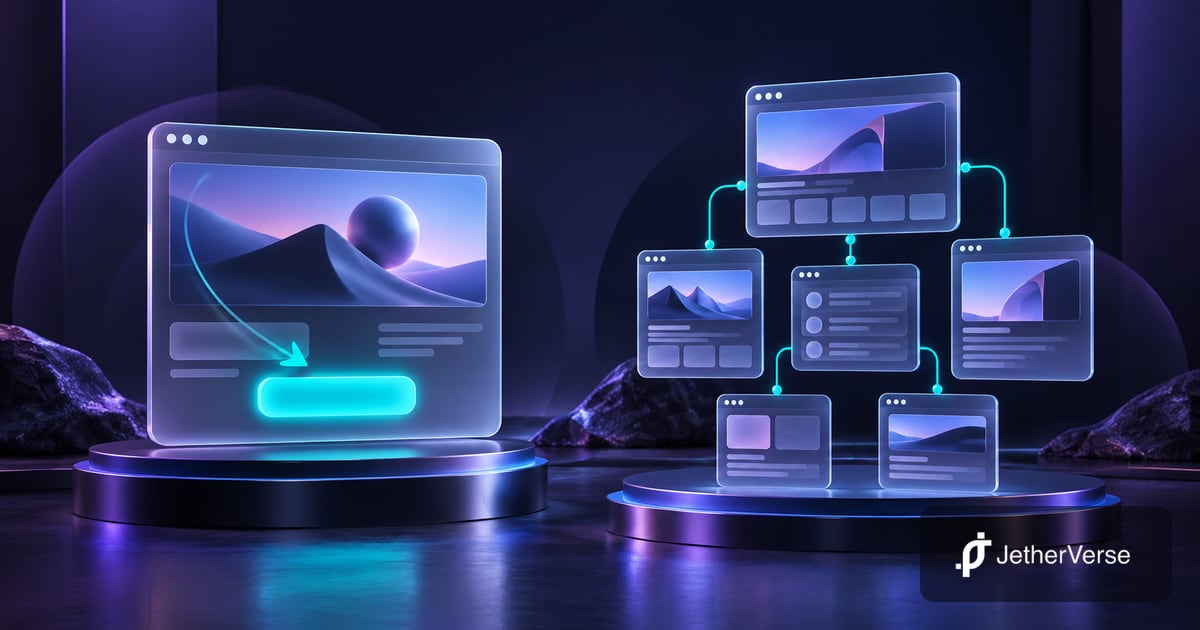
A landing page is technically any page someone arrives on. In campaign design, the phrase usually means a page built around a particular audience, offer and action. A booking page for one workshop is an example. Its job is to give visitors enough relevant information to decide whether to book.
A full business website supports several journeys. Visitors might compare services, learn about the company, read case studies, request support or make an enquiry. Those tasks need a structure that helps people move between related pages without losing their place.
The distinction is purpose, not simply length. A campaign page may contain detailed pricing, examples and questions. A small website may have only a few pages. Neither format becomes effective merely because it is short or comprehensive.
| Decision | Focused landing page | Full website |
|---|---|---|
| Main job | Support one campaign action | Support several customer journeys |
| Typical visitor question | Is this offer right for me? | Can this business solve my problem? |
| Content structure | A connected explanation of one offer | Related pages for different needs |
| Useful measurement | Qualified responses to the campaign | Outcomes across services and journeys |
| Maintenance | Offer, dates, form and campaign changes | Shared navigation, services and ongoing content |
Choose a Landing Page for One Defined Campaign
A landing page is useful when you can finish this sentence clearly: this audience should take this action because this offer addresses this need. If the sentence contains several audiences, unrelated offers and different actions, the brief probably needs separating before design begins.
For example, imagine a training business promoting a single workshop to first-time managers. Visitors need the learning outcomes, schedule, delivery format, suitability and booking terms. Sending them to a homepage covering every training programme makes them repeat the work of finding the advertised workshop.
A dedicated page can organise those answers in a useful sequence. Start with the offer and who it serves. Explain the outcome and format, provide appropriate evidence, answer likely objections and make the booking step clear. Every section should help the visitor make that particular decision.
Google's guidance on ads and landing pages recommends matching the destination to the advert and making the intended action easy to complete. Apply that principle by checking the actual wording and conditions across both. A page cannot repair an advert that promises something the business does not deliver.
Keep supporting information available
Focus does not require hiding who runs the business. Visitors may still need contact details, privacy information, terms or evidence behind a claim. Keep those routes available in a way that supports confidence without filling the main journey with unrelated promotions.
A useful campaign page also has an ending. Decide what happens when a promotion expires. You may need to update the offer, explain that registration has closed or provide a relevant alternative. Leaving an old form active can create enquiries the team cannot fulfil.
Choose a Full Website When Customers Need to Explore
A full website is usually the better starting point when the business has several services or customer types. A visitor who has only just discovered you may not be ready to request a proposal. They may need to understand your approach, compare options or check that your work fits their situation.
For example, imagine a consultancy offering strategy, implementation and ongoing support. Each service has a different scope and buying process. Putting everything on one campaign page can make the offer difficult to understand and the page difficult to maintain.
Separate service pages give each decision room. Shared company information, case studies and contact routes can then support those pages. The navigation should reflect the questions customers bring, rather than the company's internal departments.
That does not mean rebuilding every page before running a campaign. If an existing service page already explains the advertised offer, offers convincing evidence and supports the required action, improving it may be enough. Identify a specific gap before commissioning a separate destination.
JetherVerse's web design and UI/UX service can help map those journeys and decide which screens need attention. The useful output at this stage is an agreed structure and page brief, not a larger page count.
Use Both When the Campaign and Business Have Different Jobs
You do not have to choose one format for the entire business. An established website can provide the broader information visitors need while a dedicated page serves a specific campaign. The campaign destination can use the same design system, publishing tools and domain as the main site.
For example, a software business might have pages explaining its product and support arrangements. A campaign offering a guided demonstration to a particular industry could use a more focused page. That page can explain the relevant workflow and link to the broader material when someone wants detail.
Keep shared facts consistent. If a price, eligibility condition or support promise changes, there should be a named person responsible for updating every affected page. Repeated campaign pages become a liability when no one knows which offers are still valid.
Agree ownership before launch. Marketing may own the campaign message, a service lead may approve the promises and an operations colleague may receive the responses. Make those responsibilities explicit so an attractive page does not send enquiries into an unattended inbox.
A separate domain is a separate operational choice
A new domain may be appropriate for a distinct brand or product, but a campaign alone does not establish that need. Consider the additional content, tracking, access and maintenance work. Ask what the separate address solves that a page on the existing site cannot solve.
If you use a temporary campaign domain, document how it will be maintained and what happens after the campaign. Include the destination address in your handover so a future team member can find and update it.
Scope the Work Around the Complete Enquiry Journey
The number of pages is only one part of the cost. A single landing page with complex scheduling, conditional forms and several integrations may require more work than a straightforward informational site. Ask a supplier to explain the deliverables and dependencies rather than compare quotes by page count alone.
A useful brief covers content, design, development, forms, integrations, measurement and support. It also states who supplies the copy, images and evidence. A missing offer description or unapproved testimonial can delay a project even when the layout is ready.
List the states visitors will encounter. What appears after a successful submission? What happens when a required field is missing, a payment fails or a booking slot disappears? Those states are part of the customer experience and need time in the scope.
The W3C forms tutorial explains the role of labels, instructions and clear feedback in accessible forms. For your brief, specify that visitors must understand what to enter and whether the request succeeded. Test that experience with a keyboard as well as a phone.
Ask what you will receive at handover. Useful items include editing access, the approved page content, design files where agreed, an integration list and instructions for changing or ending the campaign. Make sure someone can maintain the result after the initial supplier has finished.
Measure Business Outcomes Before Expanding the Campaign
Define a successful response before launch. A form submission might be a valid enquiry, spam, a supplier pitch or a request outside your service area. Counting every submission as a qualified lead can make a campaign appear productive while creating little useful sales work.
Agree a small set of outcomes with whoever follows up. For example, record valid enquiries, qualified opportunities and bookings. Keep the definitions stable long enough to compare like with like, and document changes when the business learns something new.
Google Analytics provides a generate_lead event for measuring lead generation. Configure and verify the event against a real successful submission, rather than assuming every button click produced a lead. Follow the applicable privacy and consent requirements for your implementation.
Then check the receiving system. Submit a test enquiry, confirm it reaches the correct person and verify that the confirmation shown to the visitor matches the actual process. A working analytics event does not establish that an email or customer record arrived.
If you compare two page versions, record what changed and the conditions around the test. Different audiences, offers or response times can affect the result. Treat small or uneven samples cautiously, and avoid declaring a winner simply because one version received an extra enquiry.
A Practical Framework for Your Campaign Decision
Use the following checklist before requesting a quote. Write the answers in a shared document and resolve disagreements about the offer before anyone starts drawing screens.
- Define the audience. Describe who the campaign is for, what brought them to the page and what they already understand.
- Choose the action. State whether visitors should book, buy, request a quote or do something else. Explain what happens after that action.
- List the required answers. Include the information a reasonable visitor needs before committing. Separate essential explanations from background material.
- Inspect the existing destination. Check whether a current service or product page can support the campaign with a focused improvement.
- Choose the structure. Use a landing page for one defined decision. Use a website structure for several journeys. Combine them when the campaign needs focus and the business needs depth.
- Assign ownership. Name the people approving the offer, receiving enquiries and maintaining the page.
- Set acceptance checks. Include mobile use, form errors, successful submissions, receiving systems and measurement.
- Plan the review. Decide when to inspect lead quality and what will happen when the campaign ends.
A concise brief might read: “We are promoting one workshop to new managers. Visitors need to understand the outcome, date and suitability before booking. We need a focused page within the current website, a verified booking journey and a named owner for enquiries.” This is a hypothetical example, not a promise that one structure will suit every campaign.
Frequently Asked Questions
Do I need a landing page for my campaign?
You need a suitable destination. That may be a dedicated landing page or an existing page that already answers the campaign's questions and supports its action. Start by checking relevance, clarity and the working enquiry journey.
Is a landing page better than a full website for paid ads?
It can suit one offer and audience, but the format alone does not establish performance. Compare the visitor's decision, available evidence and quality of responses. A relevant existing product page may be a sensible destination.
Can a landing page be part of my business website?
Yes. It can sit within the existing domain and share the site's editing tools and design system. Agree how visitors can access supporting information and who will maintain campaign-specific details.
Should a campaign page have navigation?
Include routes that help visitors evaluate the offer and use the service. Avoid filling the page with unrelated choices, but keep necessary business, contact and policy information accessible. Test the journey with the intended audience.
Is a landing page always cheaper to build?
No. Content, integrations, booking logic, measurement and review requirements all affect the scope. Compare deliverables and support responsibilities rather than assuming that one page means a simple project.
Conclusion
Choose the structure that helps the visitor make the decision your campaign asks of them. A focused offer may need a focused landing page. A business with several services and research needs usually benefits from a broader website, with campaign pages added where they serve a clear purpose.
Before spending on design or advertising, write down the audience, action, required information and follow-up process. Then verify the complete journey and judge the result by useful business responses. That gives you a stronger basis for improvement than page count or visual preference alone.
How JetherVerse Can Help
JetherVerse can review your existing destination, map the customer journey and scope a campaign page or wider site through our web design and UI/UX service. Share the offer and the action you want visitors to take so we can discuss a practical approach.
What we offer:
- Website and campaign destination reviews
- User flows and page structure
- Wireframes for key customer decisions
- Responsive visual design for mobile and desktop
- Clickable prototypes and usability checks
- Developer handoff or coordinated design and build
Book a free consultation: cal.com/jetherverse or reach us through our contact page.
- 📧 Email: info@jetherverse.com
- 📞 Phone: +234 915 983 1034
- 🌐 Website: jetherverse.com